
Moving Out
I've done a few things I'm proud of with Blogger, but it's time to move on to better things. My new website, which focuses more on journalism than anything I did with the Omnibus, is called Raw Creative Society and you can find it here: http://racreativesoc.wordpress.com/
I hope to find you guys there.
Wednesday, February 11, 2009

Wilco Discography Review Pt. 6
Sky Blue Sky (Nonesuch; 2007)
 I don’t like Sky Blue Sky. It’s too tame, sounds too polished and the song writing takes two steps backwards for everything that they did right. And they did do a few things right here, namely the opening track Either Way, but after Either Way’s perfect hooks and besides Impossible Germany’s nice jam, Sky Blue Sky is easier forgotten, and better off, to be honest. Although A Ghost Is Born was relatively tame as well, it was still an ambitious, courageous album. Sky Blue Sky just feels like an album made by a band that forgot its fans for a few recording sessions. It feels like an album that an album taking the lazy way out would make. There are a few admirable tracks, namely the two mentioned above and Hate It Here, but you’ll find you’re trying to convince yourself that it’s all really not as bad as it seems, that after a few times it’ll get better. It does, but there are more engaging things to listen to in the meantime. Depending on what you're looking for in Wilco - last eras country songsmiths or exciting, experimental Yankee Hotel Foxtrotters - you might favour or hate this album. To me, it belongs in the background, and it might be the same for you. Deal with that or skip this entirely.
Unfortunately, this will be the last entry in this retrospective, due to other interests being pursued.
 I don’t like Sky Blue Sky. It’s too tame, sounds too polished and the song writing takes two steps backwards for everything that they did right. And they did do a few things right here, namely the opening track Either Way, but after Either Way’s perfect hooks and besides Impossible Germany’s nice jam, Sky Blue Sky is easier forgotten, and better off, to be honest. Although A Ghost Is Born was relatively tame as well, it was still an ambitious, courageous album. Sky Blue Sky just feels like an album made by a band that forgot its fans for a few recording sessions. It feels like an album that an album taking the lazy way out would make. There are a few admirable tracks, namely the two mentioned above and Hate It Here, but you’ll find you’re trying to convince yourself that it’s all really not as bad as it seems, that after a few times it’ll get better. It does, but there are more engaging things to listen to in the meantime. Depending on what you're looking for in Wilco - last eras country songsmiths or exciting, experimental Yankee Hotel Foxtrotters - you might favour or hate this album. To me, it belongs in the background, and it might be the same for you. Deal with that or skip this entirely.
Unfortunately, this will be the last entry in this retrospective, due to other interests being pursued.
Monday, February 9, 2009
Wilco Discography Review Pt. 5
A Ghost Is Born [Nonesuch; 2004]
 Yankee Hotel Foxtrot was the black sheep of Wilco’s discography. There’s a clear thematic progression from A.M to Summerteeth; that is, you feel Tweedy grow as his song writing matures. Yankee Hotel stands still, doesn’t feel like a growth in lyrics as much as it does in music. And then came A Ghost Is Born, probably Wilco’s most depressing album and Tweedy’s most frightening incarnation. One of the first things you’ll notice about the album is that two of the songs, the second and penultimate songs, are both over 10 minutes long. Wilco have never composed a song that long, and for it to happen more than once is, if not interesting, then a bit worrisome. The fact becomes more affecting when the first song, At Least That’s What You Said starts playing. The song starts off very quiet, so quiet in fact that you can barely hear Tweedy, who sounds like he’s giving up on singing altogether. Will the two 10 minute songs be as dull as this? You think, until the song picks up with a long garage jam that would have never found a place in Yankee Hotel’s eccentric production, Summerteeth’s psychedelia, and A.M’s perfect alt-country. It would have made sense in Being There, but even then it would have been a stretch. As soon as At Least That’s What You Said picks up, you know that A Ghost Is Born is, once again, nothing like what came before. Wilco are good at doing that.
A Ghost Is Born does something exceptionally interesting and, ultimately (if you have the patience) rewarding: It is the sequel to all Wilco releases thus far. It is the culmination of every idea and every character that had been created by that point. In A Ghost Is Born, Tweedy marries the overwhelming flaws he’s been hinting at up to that point with the violence and malevolence he’d been brewing since Summerteeth, but also with the good guy he’d been subtly adopting since his early days. His flaws are best exemplified in At Least That’s What You Said, where Tweedy comes to love the relationship he’s part of despite the black eye he sports from his love, as if the girl from She’s A Jar (from Summerteeth) finally hit back; In Handshake Drugs, where in the end he surrenders to his significant other, telling her that all he wants to be is what she wants him to be, so “exactly what do you want me to be?” And in Wishful Thinking, where he thanks his lucky stars that “you’re not me.” His flaws also seem to feed his evil, exemplified in Hell Is Chrome where Hell is, to him, a place where he belongs, a paradise better than Earth, and where the devil doesn’t force him to do anything, instead asking him to “come with me.” Strangely, Tweedy also sings about things that kind of make him the good guy, as in Hummgbird and Wishful Thinking, but don’t let those two songs convince you of anything, for Tweedy is once again a bastard in Less Than You Think. As for the similarities to Yankee Hotel, Jim O’Rourke returns to produce this one as well, but the album doesn’t sound like Yankee Hotel. There’s no static (except for the last 10 minutes of Less Than You Think) and no Heavy Metal Drummers, but perhaps that’s best.
A Ghost Is Born is more cohesive, and makes more sense than anything that came before. It really draws an atmosphere, making you feel like you’re trapped inside the egg on the album’s cover, a prison from which you escape only to find nothing of value outside of it. It will take a lot of patience to get through this album if you’re expecting the sequel to Yankee Hotel or even the spirit of Summerteeth, but you may find it well worth it. They band has never really written anything as affecting, or as haunting. Don’t be surprised if it becomes your favourite of all of them.
 Yankee Hotel Foxtrot was the black sheep of Wilco’s discography. There’s a clear thematic progression from A.M to Summerteeth; that is, you feel Tweedy grow as his song writing matures. Yankee Hotel stands still, doesn’t feel like a growth in lyrics as much as it does in music. And then came A Ghost Is Born, probably Wilco’s most depressing album and Tweedy’s most frightening incarnation. One of the first things you’ll notice about the album is that two of the songs, the second and penultimate songs, are both over 10 minutes long. Wilco have never composed a song that long, and for it to happen more than once is, if not interesting, then a bit worrisome. The fact becomes more affecting when the first song, At Least That’s What You Said starts playing. The song starts off very quiet, so quiet in fact that you can barely hear Tweedy, who sounds like he’s giving up on singing altogether. Will the two 10 minute songs be as dull as this? You think, until the song picks up with a long garage jam that would have never found a place in Yankee Hotel’s eccentric production, Summerteeth’s psychedelia, and A.M’s perfect alt-country. It would have made sense in Being There, but even then it would have been a stretch. As soon as At Least That’s What You Said picks up, you know that A Ghost Is Born is, once again, nothing like what came before. Wilco are good at doing that.
A Ghost Is Born does something exceptionally interesting and, ultimately (if you have the patience) rewarding: It is the sequel to all Wilco releases thus far. It is the culmination of every idea and every character that had been created by that point. In A Ghost Is Born, Tweedy marries the overwhelming flaws he’s been hinting at up to that point with the violence and malevolence he’d been brewing since Summerteeth, but also with the good guy he’d been subtly adopting since his early days. His flaws are best exemplified in At Least That’s What You Said, where Tweedy comes to love the relationship he’s part of despite the black eye he sports from his love, as if the girl from She’s A Jar (from Summerteeth) finally hit back; In Handshake Drugs, where in the end he surrenders to his significant other, telling her that all he wants to be is what she wants him to be, so “exactly what do you want me to be?” And in Wishful Thinking, where he thanks his lucky stars that “you’re not me.” His flaws also seem to feed his evil, exemplified in Hell Is Chrome where Hell is, to him, a place where he belongs, a paradise better than Earth, and where the devil doesn’t force him to do anything, instead asking him to “come with me.” Strangely, Tweedy also sings about things that kind of make him the good guy, as in Hummgbird and Wishful Thinking, but don’t let those two songs convince you of anything, for Tweedy is once again a bastard in Less Than You Think. As for the similarities to Yankee Hotel, Jim O’Rourke returns to produce this one as well, but the album doesn’t sound like Yankee Hotel. There’s no static (except for the last 10 minutes of Less Than You Think) and no Heavy Metal Drummers, but perhaps that’s best.
A Ghost Is Born is more cohesive, and makes more sense than anything that came before. It really draws an atmosphere, making you feel like you’re trapped inside the egg on the album’s cover, a prison from which you escape only to find nothing of value outside of it. It will take a lot of patience to get through this album if you’re expecting the sequel to Yankee Hotel or even the spirit of Summerteeth, but you may find it well worth it. They band has never really written anything as affecting, or as haunting. Don’t be surprised if it becomes your favourite of all of them.
Saturday, February 7, 2009
Wilco Discography Review Pt. 4
Yankee Hotel Foxtrot (Nonesuch; 2002)
 At the end of the 90s, soon after Summerteeth, something strange happened to Wilco, a train of circumstances that create a story that alone propels an album to classic status. It’s a case of “the lead singer has a vision so the rest of the band better comply or **** off,” a-la My Bloody Valentine in Loveless albeit My Bloody Valentine are still the same band going in as they were coming out. But the comparisons still apply. Just like Loveless, Yankee Hotel Foxtrot took about two years between its creation and its release; there were money issues, illnesses (migraines for Tweedy and insomnia for Kevin Shields of My Bloody Valentine) and the end result was an album that explored new sonic landscapes.
This is where the story gets good: thinking that the album had no “pop appeal,” Wilco’s label for the past three albums, Reprise, refused to release it. So they took their demos and went to Reprise’s hotter, smarter little sister Nonesuch Records, and the album gets released in 2002 to both critical and popular acclaim, becoming Wilco’s highest selling album at the time. I’m not sure who said it, but I once heard someone say that Tweedy was the first individual to successfully mix Folk/Country with a laptop. But don’t fear, people – this isn’t the second coming of Cotton Eyed Joe. Yankee Hotel Foxtrot is instead a masterpiece of song structure and progression, easily the band’s defining moment and pinnacle. The most amazing thing is that nothing on Yankee Hotel sounds like anything that came before it, not even Summerteeth. The songs are so dense that even the more straightforward tracks like Kamera and Pot Kettle Black would have been out of place in anything that came before, and to be honest, anything that came after. Thank Jim O’Rourke, who once co-produced Stereolab’s fantastic “Emperor Tomato Ketchup.”
Most people criticise Yankee Hotel for its predominantly low-key tracks, making the album boring or uninteresting. It honestly boggles my mind, but I think I understand what happened. Most new listeners trying to get into Wilco are taught that the band is a mix of alternative, country, and sometimes psychedelia. When “I Am Trying To Break Your Heart” comes on, most of these people don’t know what’s happening, and the confusion only builds up in the next 6 minutes. It also happened to people who listened to Summerteeth or A.M shortly before jumping into Yankee Hotel. When they don’t hear “Can’t Stand It” or “I Must Be High” right away, they are likewise confused. It doesn’t help that the lyrics make no real sense, and just when you think you have the album pinned down, Kamera comes on and ****s up the entire system again. So, for the first three tracks, two of which are over five minutes, the listener doesn’t know what to believe. It’s just too much of a mind****. So, mix low-key songs with questionable production and wtf lyrics and you’ve got the first few minutes of Yankee Hotel. This isn’t alt country! Then there are the more patient listeners who get the album right away, or who thrive in being tossed from one idea to the next – who get that there’s more to the album than they’ve been led to believe. And there is.
Tweedy is no longer singing about the same people and emotions with the same immediacy as Wilco’s preceding releases. He’s singing about them under a veil of static and interference, as if his mind was being affected by the electronic distortions that accompany each track.
I wholeheartedly believe that Yankee Hotel Foxtrot is a classic. I just know that generations from now people will appreciate it much more than it is now. From its production and release story, to its song hooks and progression, and to its minimalist album cover, everything about the album spells out modern classic. We just don’t all get it yet.
So, yes, I would call this their OK Computer; their most successful album, where the band perfect its sound and hasn’t since been able to top the achievement. I would also call it their Sgt. Pepper’s LHCB for its experimentation. From this point on the band will sound more cohesive but less interesting, like the Beatles in Abbey Road.
 At the end of the 90s, soon after Summerteeth, something strange happened to Wilco, a train of circumstances that create a story that alone propels an album to classic status. It’s a case of “the lead singer has a vision so the rest of the band better comply or **** off,” a-la My Bloody Valentine in Loveless albeit My Bloody Valentine are still the same band going in as they were coming out. But the comparisons still apply. Just like Loveless, Yankee Hotel Foxtrot took about two years between its creation and its release; there were money issues, illnesses (migraines for Tweedy and insomnia for Kevin Shields of My Bloody Valentine) and the end result was an album that explored new sonic landscapes.
This is where the story gets good: thinking that the album had no “pop appeal,” Wilco’s label for the past three albums, Reprise, refused to release it. So they took their demos and went to Reprise’s hotter, smarter little sister Nonesuch Records, and the album gets released in 2002 to both critical and popular acclaim, becoming Wilco’s highest selling album at the time. I’m not sure who said it, but I once heard someone say that Tweedy was the first individual to successfully mix Folk/Country with a laptop. But don’t fear, people – this isn’t the second coming of Cotton Eyed Joe. Yankee Hotel Foxtrot is instead a masterpiece of song structure and progression, easily the band’s defining moment and pinnacle. The most amazing thing is that nothing on Yankee Hotel sounds like anything that came before it, not even Summerteeth. The songs are so dense that even the more straightforward tracks like Kamera and Pot Kettle Black would have been out of place in anything that came before, and to be honest, anything that came after. Thank Jim O’Rourke, who once co-produced Stereolab’s fantastic “Emperor Tomato Ketchup.”
Most people criticise Yankee Hotel for its predominantly low-key tracks, making the album boring or uninteresting. It honestly boggles my mind, but I think I understand what happened. Most new listeners trying to get into Wilco are taught that the band is a mix of alternative, country, and sometimes psychedelia. When “I Am Trying To Break Your Heart” comes on, most of these people don’t know what’s happening, and the confusion only builds up in the next 6 minutes. It also happened to people who listened to Summerteeth or A.M shortly before jumping into Yankee Hotel. When they don’t hear “Can’t Stand It” or “I Must Be High” right away, they are likewise confused. It doesn’t help that the lyrics make no real sense, and just when you think you have the album pinned down, Kamera comes on and ****s up the entire system again. So, for the first three tracks, two of which are over five minutes, the listener doesn’t know what to believe. It’s just too much of a mind****. So, mix low-key songs with questionable production and wtf lyrics and you’ve got the first few minutes of Yankee Hotel. This isn’t alt country! Then there are the more patient listeners who get the album right away, or who thrive in being tossed from one idea to the next – who get that there’s more to the album than they’ve been led to believe. And there is.
Tweedy is no longer singing about the same people and emotions with the same immediacy as Wilco’s preceding releases. He’s singing about them under a veil of static and interference, as if his mind was being affected by the electronic distortions that accompany each track.
I wholeheartedly believe that Yankee Hotel Foxtrot is a classic. I just know that generations from now people will appreciate it much more than it is now. From its production and release story, to its song hooks and progression, and to its minimalist album cover, everything about the album spells out modern classic. We just don’t all get it yet.
So, yes, I would call this their OK Computer; their most successful album, where the band perfect its sound and hasn’t since been able to top the achievement. I would also call it their Sgt. Pepper’s LHCB for its experimentation. From this point on the band will sound more cohesive but less interesting, like the Beatles in Abbey Road.
Tuesday, February 3, 2009
Wilco Discography Review Pt. 3
Summerteeth (Reprise; 1998)
 Summerteeth is so sexy. The whole album is drenched in mystery, darkness, sarcasm and catharsis. This is Jeff Tweedy at his lyrical bravest. In Via Chicago, one of the album’s strongest songs, Tweedy sings, “I dreamed about killing you again last night, and it felt alright to me/ dying on the banks of Embarcadero skies, I sat and watched you bleed/ Buried you alive in a fireworks display raining down on me/ Your cold, hot blood ran away from me, to the sea.” Couple that with Tweedy’s stance on God on “Can’t Stand It” and his sadism on “She’s A Jar” and what you get is their most daring album yet. Sexy is also the album’s production, which makes Wilco sound nothing like they did on A.M three years prior. They perfected the slight psychedelia of Being There, took away anything that resembled alternative country, and really came into their own. Two posts ago I said that A.M is their most accessible album. Summerteeth definitely challenges this. Not only is each of the first seven tracks better than anything on A.M, the entire album is much more memorable.
One of the gems in the album, a song so surprising lyrically it immediately became my favourite song in the playlist, is Pieholden Suite. Whereas most of the album is kind of dark, Pieholden Suite surprises and delights by completely derailing and becoming positively nostalgic. The song starts as sad as anything else on the past three albums, but then Tweedy travels back in time to sing one perfect verse, “In the beginning we closed our eyes/ whenever we kissed we were surprised to find so much inside”, after which the song opens and builds up like a blue sky after rain. It’s a delight to listen to, but it’s often unfairly overlooked.
In continuation with the Radiohead comparison, A.M = Pablo Honey, Being There = The Bends, but Summerteeth isn’t OK Computer. If anything it’s their The Bends take two.
Although A.M is their easiest to listen to, Summerteeth is the most rewarding of the 90s releases.
 Summerteeth is so sexy. The whole album is drenched in mystery, darkness, sarcasm and catharsis. This is Jeff Tweedy at his lyrical bravest. In Via Chicago, one of the album’s strongest songs, Tweedy sings, “I dreamed about killing you again last night, and it felt alright to me/ dying on the banks of Embarcadero skies, I sat and watched you bleed/ Buried you alive in a fireworks display raining down on me/ Your cold, hot blood ran away from me, to the sea.” Couple that with Tweedy’s stance on God on “Can’t Stand It” and his sadism on “She’s A Jar” and what you get is their most daring album yet. Sexy is also the album’s production, which makes Wilco sound nothing like they did on A.M three years prior. They perfected the slight psychedelia of Being There, took away anything that resembled alternative country, and really came into their own. Two posts ago I said that A.M is their most accessible album. Summerteeth definitely challenges this. Not only is each of the first seven tracks better than anything on A.M, the entire album is much more memorable.
One of the gems in the album, a song so surprising lyrically it immediately became my favourite song in the playlist, is Pieholden Suite. Whereas most of the album is kind of dark, Pieholden Suite surprises and delights by completely derailing and becoming positively nostalgic. The song starts as sad as anything else on the past three albums, but then Tweedy travels back in time to sing one perfect verse, “In the beginning we closed our eyes/ whenever we kissed we were surprised to find so much inside”, after which the song opens and builds up like a blue sky after rain. It’s a delight to listen to, but it’s often unfairly overlooked.
In continuation with the Radiohead comparison, A.M = Pablo Honey, Being There = The Bends, but Summerteeth isn’t OK Computer. If anything it’s their The Bends take two.
Although A.M is their easiest to listen to, Summerteeth is the most rewarding of the 90s releases.
Monday, February 2, 2009
Wilco Discography Review Pt. 2
BEING THERE (Reprise; 1996)
Cool Fact: The title of the album is derived from the 1979 movie of the same name.
Cool Fact: Although it was packaged with two discs, Reprise sold Being There for the price of one.
 Hot off the heels of their 1995 effort A.M, Wilco return, sounding more atmospheric and cryptic. Whereas A.M was straight up, flannel shirt wearing alternative country with no mystery or real ambition, Being There is a sprawling double album that, when not completely doing without their alternative country sound, sounds like a more refined version of their then signature sound. As soon as “Misunderstood” starts the listener knows that this is no part of this album is going to sound like the beloved “Casino Queen” or “I Must Be High” of the year prior.
“Far, Far Away,” is probably the first lyrical surprise. At first it sounds like something that could have belonged in A.M, until the song nears its conclusion as Tweedy explains that he will find his beloved in the dark side. Citing The Dark Side Of The Moon provides the song with an eerie vibe that hints at Tweedy’s soon to be most infamous vocal, “I dreamt about killing you again last night, and it felt alright to me” (from Summerteeth). Although there are songs like “Monday” and “Outtasite (Outta mind)” (and, really, most of Disc 1) that are musically and thematically similar to the tracks found on A.M, there are a few surprise inclusions. “Kingpin” sounds like something Beck would have conjured, and “Dreamer In My Dreams” sounds like the Beatles resurrected.
Plenty of Disc 2 also sounds more country (minus the alt) than A.M, creating a diverse, often surprising though sometimes-redundant double album. I’m going to cheat and go back and say that A.M is not their transition album, but that Being There is. There are hints of what came before and what is to come for the band musically and thematically, though they would really depart in the psychedelic Summerteeth.
If A.M was their Pablo Honey, Being There is definitely their Bends.
Cool Fact: The title of the album is derived from the 1979 movie of the same name.
Cool Fact: Although it was packaged with two discs, Reprise sold Being There for the price of one.
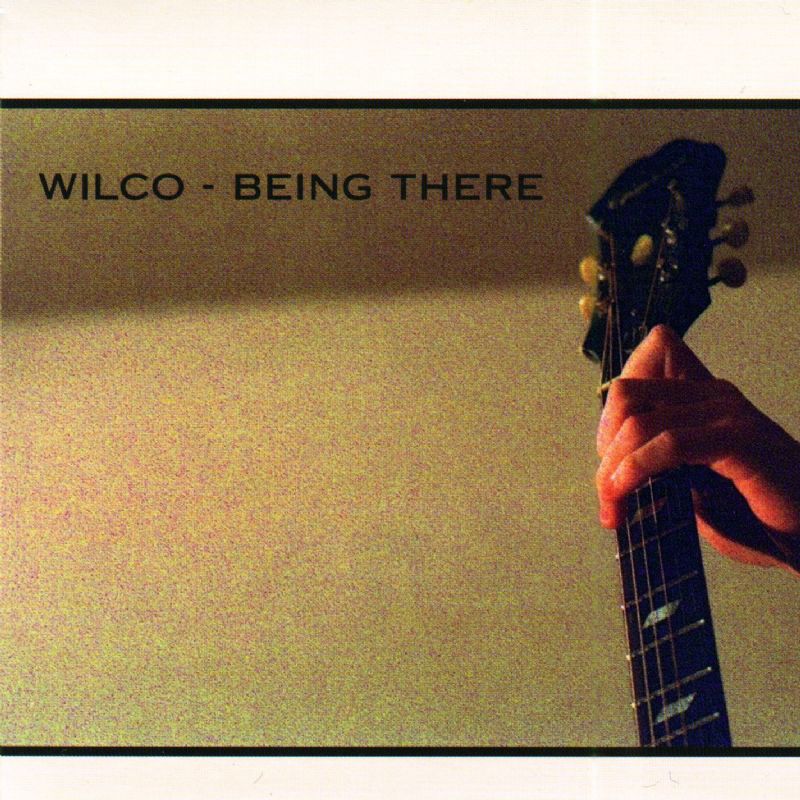 Hot off the heels of their 1995 effort A.M, Wilco return, sounding more atmospheric and cryptic. Whereas A.M was straight up, flannel shirt wearing alternative country with no mystery or real ambition, Being There is a sprawling double album that, when not completely doing without their alternative country sound, sounds like a more refined version of their then signature sound. As soon as “Misunderstood” starts the listener knows that this is no part of this album is going to sound like the beloved “Casino Queen” or “I Must Be High” of the year prior.
“Far, Far Away,” is probably the first lyrical surprise. At first it sounds like something that could have belonged in A.M, until the song nears its conclusion as Tweedy explains that he will find his beloved in the dark side. Citing The Dark Side Of The Moon provides the song with an eerie vibe that hints at Tweedy’s soon to be most infamous vocal, “I dreamt about killing you again last night, and it felt alright to me” (from Summerteeth). Although there are songs like “Monday” and “Outtasite (Outta mind)” (and, really, most of Disc 1) that are musically and thematically similar to the tracks found on A.M, there are a few surprise inclusions. “Kingpin” sounds like something Beck would have conjured, and “Dreamer In My Dreams” sounds like the Beatles resurrected.
Plenty of Disc 2 also sounds more country (minus the alt) than A.M, creating a diverse, often surprising though sometimes-redundant double album. I’m going to cheat and go back and say that A.M is not their transition album, but that Being There is. There are hints of what came before and what is to come for the band musically and thematically, though they would really depart in the psychedelic Summerteeth.
If A.M was their Pablo Honey, Being There is definitely their Bends.
Tuesday, January 27, 2009
Wilco Discography Review Introduction & Pt. 1
 Jeff Tweedy is a trooper. First a member of the band The Primitives, then the member of Uncle Tupelo after lead singer of The Primitives split, and currently a member of Wilco when Jay Farrar of Uncle Tupelo and Tweedy’s relationship soured; Tweedy must think he’s pretty special, or he really does love music enough to stick around for this long. Coincidentally, I must think Wilco, the band he fronts, is pretty special to be writing an entire discography review/retrospective. Truth is I do think that Wilco are pretty special, if not solely for the fact that their 2002 effort Yankee Hotel Foxtrot was such an outstanding and distinctive album. But though Yankee Hotel was their undeniable pinnacle, their diverse discography and interesting collaborations make them more than just that band that released one of the most triumphant albums of this. Starting where they started, this retrospective will focus first on Wilco’s studio albums and then their live albums and collaborations. American aquarium drinkers please sit back and relax.
Pt. 1: A.M (Reprise; 1995)
Wilco had not yet shaken off Uncle Tupelo’s alternative country sound when they released A.M in 1995, shortly after the previous band’s break-up. Not much of a break-up, however, for most of the band members of Uncle Tupelo stuck around to create Wilco. Regardless, this is their transition record. As a Wilco album, it is a stepping-stone and hardly the shape of things to come for the band musically, yet lyrically it is very similar to everything else Tweedy will write. Someone once noted in Wilco’s last.fm shout box that A.M is their Pablo Honey (Radiohead), and they couldn’t be more right. They will soon sound more refined and ambitious on Being There, but more on that later. A.M is arguably their most accessible album, starting pop rocky and catchy with “I Must Be High” and following strong with “Casino Queen.” Soon after that the listener will notice a pattern. Each song is its own contained entity, none really contributing to a sensible flow. Thematically the songs don’t really change, making each succeeding song sound like old ground, although things get slightly mixed up with “That’s Not The Issue,” a banjo driven song. Although A.M is by no means a bad album, when compared to everything else that comes later it is a relatively unimpressive one.
Jeff Tweedy is a trooper. First a member of the band The Primitives, then the member of Uncle Tupelo after lead singer of The Primitives split, and currently a member of Wilco when Jay Farrar of Uncle Tupelo and Tweedy’s relationship soured; Tweedy must think he’s pretty special, or he really does love music enough to stick around for this long. Coincidentally, I must think Wilco, the band he fronts, is pretty special to be writing an entire discography review/retrospective. Truth is I do think that Wilco are pretty special, if not solely for the fact that their 2002 effort Yankee Hotel Foxtrot was such an outstanding and distinctive album. But though Yankee Hotel was their undeniable pinnacle, their diverse discography and interesting collaborations make them more than just that band that released one of the most triumphant albums of this. Starting where they started, this retrospective will focus first on Wilco’s studio albums and then their live albums and collaborations. American aquarium drinkers please sit back and relax.Pt. 1: A.M (Reprise; 1995)
Wilco had not yet shaken off Uncle Tupelo’s alternative country sound when they released A.M in 1995, shortly after the previous band’s break-up. Not much of a break-up, however, for most of the band members of Uncle Tupelo stuck around to create Wilco. Regardless, this is their transition record. As a Wilco album, it is a stepping-stone and hardly the shape of things to come for the band musically, yet lyrically it is very similar to everything else Tweedy will write. Someone once noted in Wilco’s last.fm shout box that A.M is their Pablo Honey (Radiohead), and they couldn’t be more right. They will soon sound more refined and ambitious on Being There, but more on that later. A.M is arguably their most accessible album, starting pop rocky and catchy with “I Must Be High” and following strong with “Casino Queen.” Soon after that the listener will notice a pattern. Each song is its own contained entity, none really contributing to a sensible flow. Thematically the songs don’t really change, making each succeeding song sound like old ground, although things get slightly mixed up with “That’s Not The Issue,” a banjo driven song. Although A.M is by no means a bad album, when compared to everything else that comes later it is a relatively unimpressive one.
Wednesday, January 21, 2009
Slumdog Millionaire
 One Sentence Review: Beyond the veil of suspense, rawness and intensity, Slumdog Millionaire is just another predictable yet incredibly powerful Hollywood love story that just happens to be shot by one of the smartest directors of our generation. 9.2/10
More Detail: Directed by Danny Boyle (28 Days Later, Trainspotting, Sunshine) and based off Vikas Swarup's 2005 novel Q & A, Slumdog Millionaire pushes all the right buttons at exactly the right times, starting intensely and not really seizing until the latter end of the film, from which point it becomes standard Hollywood fare. But don't let that keep you from watching the film. It's tightly wound and the cinematography is fantastic, specially near the end of the film.
There's also a surprise bonus accompanying the credits which you should definitely stay for. It's a bizarre addition, and wholly entertaining.
All in all, watch the film for its power and vision, but if you expect it to change your life then you can do better, unless you're not yet tired of hearing how important and romantic destiny is and all that cal.
Wednesday, January 14, 2009
From The Vaults: Album in Retrospect - The Soft Bulletin by The Flaming Lips
Originally published for The Frequency webzine in 2007 (the website has since lost its domain). Here it is, raw:
-----------------
 Believe it or not, there was once a time when The Flaming Lips did not sound the way they did since their 1999 masterpiece, The Soft Bulletin. Before it, they had Clouds Taste Metallic and the acclaimed Transmissions from the Satellite Heart, which had little else besides indie rock running through their veins. Then came Zaireeka, and though it was a critical darling – for the most part – and was favourably acknowledged by hardcore Flaming Lips fans, it did very little for the band but put them in the same spot that the Magnetic Fields were put in since their magnus opus 69 Love Songs. In other words, they were respected for trying something different, but if their next record did little more than what they conjured for Clouds and Transmissions, then the Lips would surely be replaced by more interesting acts. Their drastic change in style was probably inspired by the predicament that they put themselves in since Zaireeka. There was certainly a lot of pressure for the band, especially from its label, and especially after Roland Jones left the band, but fortunately for all of us the Lips are a band that seems to work better under pressure.
-----------------
 Believe it or not, there was once a time when The Flaming Lips did not sound the way they did since their 1999 masterpiece, The Soft Bulletin. Before it, they had Clouds Taste Metallic and the acclaimed Transmissions from the Satellite Heart, which had little else besides indie rock running through their veins. Then came Zaireeka, and though it was a critical darling – for the most part – and was favourably acknowledged by hardcore Flaming Lips fans, it did very little for the band but put them in the same spot that the Magnetic Fields were put in since their magnus opus 69 Love Songs. In other words, they were respected for trying something different, but if their next record did little more than what they conjured for Clouds and Transmissions, then the Lips would surely be replaced by more interesting acts. Their drastic change in style was probably inspired by the predicament that they put themselves in since Zaireeka. There was certainly a lot of pressure for the band, especially from its label, and especially after Roland Jones left the band, but fortunately for all of us the Lips are a band that seems to work better under pressure.
 Re-introducing The Soft Bulletin: At once the The Flaming Lip’s Achtung Baby and Pet Sounds, and thus the band’s definitive effort. If you have yet to listen to the record, beyond are a number of reasons why you should discard all other activities and proceed to do so.

If you are familiar with the history of the record, you might also know that there were a number of different versions released of it, with different playlists and remixes defining each package. This was a result of Warner Bros. hoping to make the record more accessible to different audiences. There was the US release with a drastically different playlist than the UK release, and then there was the vinyl playlist and the 5.1 Surround Sound re-release. I would recommend the UK release over all the others, if only for the fact that this particular playlist makes the most sense to me. For one, the vinyl and US releases do not conclude with Buggin’ which is, through-and-through, an album closer. It ends the record with bang, and comes perfectly after the album re-sets the mood with the Race for the Prize and Waitin’ for a Superman [Mokran] remixes. The problem with the US release is that it concludes the record with the two aforementioned remixes (albeit from different entities), skipping the sense of closure that the listener is supposed to feel after devoting their time to the album. The vinyl release does not have the remixes, which, for once in my life, I feel actually enhance the album that they are associated with. I also prefer Slow Motion to The Spiderbite Song, but that’s just a matter of taste. You might disagree with my decision, for it really depends on what album you have grown accustomed to, but for the sake of continuity I prefer the UK release.
That said, onto the record itself. Many people take the 90s for granted. Many say that the 60s and 70s were the eras when all the classic records came out, from all the classic bands, but the 90s should not be discarded. The era experienced Loveless, the most acclaimed record by shoegazing pioneers My Bloody Valentine; grunge/pop masters Nirvana released Nevermind; Radiohead with their stunning triumvirate of records; indie superstars Neutral Milk Hotel went out with In the Aeroplane Over the Sea; the ambitious Smashing Pumpkins had Siamese Dream and Mellon Collie and the Infinite Sadness to please fans, and, of-course, The Flaming Lips’ The Soft Bulletinin was released by the end of the decade. Granted, these records aren’t immediate in their genius, not in the same way that, say Led Zeppelin IV, Sgt. Pepper’s Lonely Hearts Club Band and Paranoid were immediately ground-breaking, but they still deserve their due. Perhaps most of us rather forget the 90s, due in part to Grunge’s domination and the disgrace that were the boy/girl bands of the late decade, but all of these things make The Soft Bulletin all the more special. In a decade where mainstream music seemed to be on a downward spiral, whilst the underground boomed with life, The Soft Bulletin successfully merged the two scenes. Being released by Warner Bros. but not nearly as commercial as the re-releases would make you believe, The Soft Bulletin is certainly an oddity. In-fact, it is a paradox onto itself. Wayne Coyne’s lyrics are not the deepest – they are certainly lacking in vocabulary, but they are perfect for the bright and dream-like soundescapes that litter the album and their timing within each song propel them to impossible heights. It is a perfect example of syntax and context over vocabulary. The paradox is thus that the record shouldn’t feel as deep as it does, considering the lyrical quality, yet it does. Then we have Coyne’s vocals, which at times seem to crack as he struggles to hit a higher note. At first, the listener might be inclined to point out how hilariously terrible his voice is in songs like A Spoonful Weighs a Ton and The Spiderbite Song, but just like Billie Corgan’s [with the Smashing Pumpkins] and Jeff Mangum’s voice [in Neutral Milk Hotel] before him, the struggles are a motif, and should be addressed alongside the context of the lyrics sung about. That said, what exactly do the Lips sing about this time around? They sing about alienation, absurdity, nostalgia, pain, and on the flip-side: hope, bliss, affection, and not giving up while struggling with the will to live. So, it is about a lot of things that you may or may not have considered before, but most likely will after giving this album a few listens. It is humbling, to say the least, and for some it might be life-changing. Stylistically, the album differentiates from its predecessors by focusing on bells and effects rather than guitars and reverb. The bombastic drumming returns, but it serves a different purpose this time around. In short, the instrument that drives the music this time around is Coyne’s vocals.
The Flaming Lips did for the new millennium what U2 did for the start of the 90s. Both bands re-invented their sound, making traditionalists scoff, but in the process they became more relevant and successful. No album list is complete without The Soft Bulletin, and more specifically, its UK release. It is an album about the end of the world, or the coming of some sort of apocalypse, but it is also about how we as individuals can live through it all, together or apart, in physical form or in our minds and through our ideas. Such is the reason why the record is timeless, and in a few decades it will get its due where it deserves. Let’s just hope it happens sooner than later.
- Eugenio’s first Flaming Lips record was Yoshimi Battles the Pink Robots.
A Good Way to Lower Your Standards
... And live slightly more relaxed. I'm a picky guy, always comparing what I have to what others have. Its a habit I'm trying to kick, trust me. Anyways, one random day I thought of something to say whenever my pickyness gets in the way of me enjoying what I have:
"Though things are supposed to be, they may not be, and so what is we should embrace."
Though there are rebuttals to this kind of thinking (such as how far down should you allow yourself to lower your standards, and why should you compromise with what you have if you're not enjoying it fully?) it's helped me cool down and embrace the moment.
I invite you to take this philosophy and develop it so that it makes sense for you.
"Though things are supposed to be, they may not be, and so what is we should embrace."
Though there are rebuttals to this kind of thinking (such as how far down should you allow yourself to lower your standards, and why should you compromise with what you have if you're not enjoying it fully?) it's helped me cool down and embrace the moment.
I invite you to take this philosophy and develop it so that it makes sense for you.
Tuesday, January 13, 2009
Overthinking: CKY - Infiltrate, Destroy, Rebuild
Ladies and gentlemen, grab your DC House Co. shoes, Volcom hoodie and West49 flat visor cap, place the latter sideways on your head and get ready to bang your head, for it's the second Overthinking feature in one day and this time we are overthinking CKY's 2000 release, "Infiltrate, Destroy, Rebuild"
-------------------
 Let me tell you how I got to this point: Earlier today I was looking through my most played artists in my iLike profile, which goes further back than my last.fm profile, and in this most played artists list I noticed CKY, a hard-rock, skate-punk band from my highschool days when I was mostly jealous of people who could skate than that dude with a 90+ average.
In an instant I was reminded of Viva La Bam, trash-tv at its finest and at the time one my favourite TV shows; of my obsession with all things CKY, including the hook for 96 Quite Bitter Beings, and how all of a sudden I just wasn't in love with CKY anymore; how all of a sudden I was listening to unaccessible, introspective or at least profound music without a clear transition.
So I decided to revisit those days when I didn't quite know myself too well, nor did I seem to want to get to know myself. I decided to give Infiltrate, Destroy, Rebuild onother go. Before I gave it another listen I decided to check some reviews online to see what people thought of the album. Did people love it as much as I did? Rolling Stone definitely didn't, citing the lyrics and apparent generic sound as the main offenders. But I gave the album a listen anyway, and I realized that Jon Caramanica missed the point.
So, what is the point, exactly? It's the way the band sounds, and the way the album progresses. There are moog synthesizers going off as guitars get piled up ontop of each-other, as drum beats drive the music, and as growls make it all make sense. Every song has a hook; rhythms are used to conjure horror. This is pulp music, a kind of categorization that makes absolutely no sense, but here's what I mean: it is throwaway music, nothing that will change your life in any profound way, but something that you can enjoy for its overwhelming ridiculousness.
The album itself is no more than 33 minutes, and every song follows immediately after its predecessor, making sure that the album never loses momentum, not even when tamed closer Close Yet Far does its thing.
The album is grindhouse cinema: trashy, violent, and ridiculous, but what it does, it does well. For its ability to make you go "holy fuck, that's awesome!" without changing your life in any way shape or form, CKY's best effort so far, Infiltrate, Destroy, Rebuild is a quick, adernaline filled, worthwhile listen.
-------------------
 Let me tell you how I got to this point: Earlier today I was looking through my most played artists in my iLike profile, which goes further back than my last.fm profile, and in this most played artists list I noticed CKY, a hard-rock, skate-punk band from my highschool days when I was mostly jealous of people who could skate than that dude with a 90+ average.
In an instant I was reminded of Viva La Bam, trash-tv at its finest and at the time one my favourite TV shows; of my obsession with all things CKY, including the hook for 96 Quite Bitter Beings, and how all of a sudden I just wasn't in love with CKY anymore; how all of a sudden I was listening to unaccessible, introspective or at least profound music without a clear transition.
So I decided to revisit those days when I didn't quite know myself too well, nor did I seem to want to get to know myself. I decided to give Infiltrate, Destroy, Rebuild onother go. Before I gave it another listen I decided to check some reviews online to see what people thought of the album. Did people love it as much as I did? Rolling Stone definitely didn't, citing the lyrics and apparent generic sound as the main offenders. But I gave the album a listen anyway, and I realized that Jon Caramanica missed the point.
So, what is the point, exactly? It's the way the band sounds, and the way the album progresses. There are moog synthesizers going off as guitars get piled up ontop of each-other, as drum beats drive the music, and as growls make it all make sense. Every song has a hook; rhythms are used to conjure horror. This is pulp music, a kind of categorization that makes absolutely no sense, but here's what I mean: it is throwaway music, nothing that will change your life in any profound way, but something that you can enjoy for its overwhelming ridiculousness.
The album itself is no more than 33 minutes, and every song follows immediately after its predecessor, making sure that the album never loses momentum, not even when tamed closer Close Yet Far does its thing.
The album is grindhouse cinema: trashy, violent, and ridiculous, but what it does, it does well. For its ability to make you go "holy fuck, that's awesome!" without changing your life in any way shape or form, CKY's best effort so far, Infiltrate, Destroy, Rebuild is a quick, adernaline filled, worthwhile listen.
Overthinking: The Dark Knight
Ladies and gentlemen, get comfortable in your seats, dim the lights and whisper in a raspy voice because we are about to over think Christopher Nolan's The Dark Knight.
-------------------
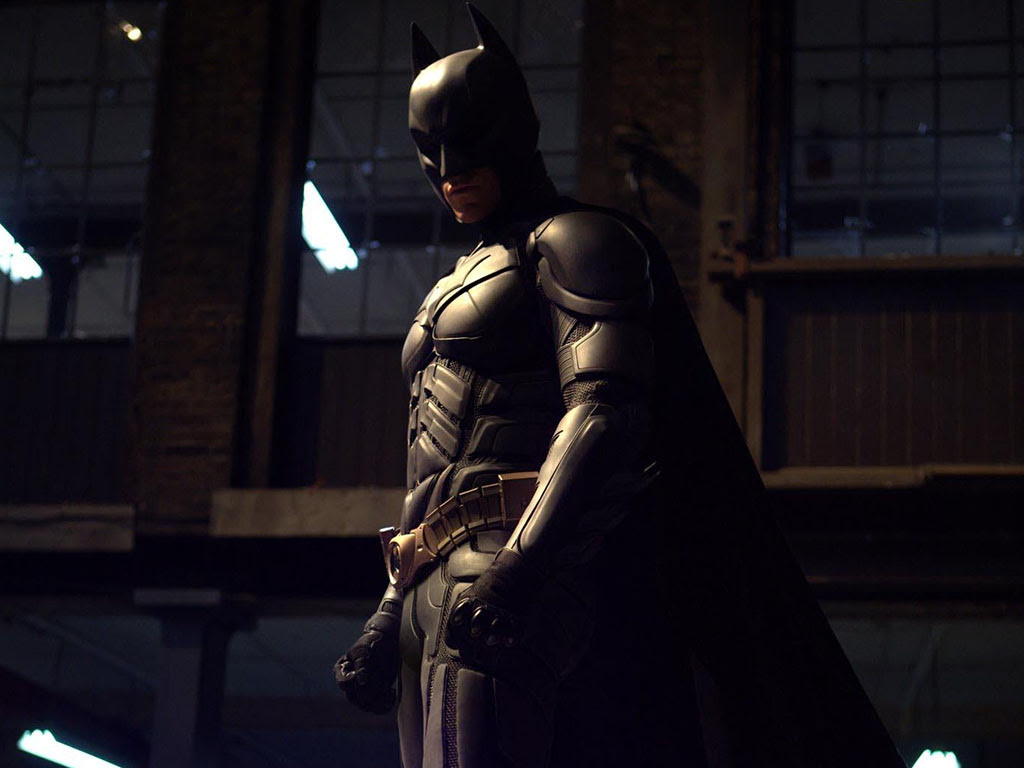 Everything's been said about The Dark Knight, good and bad, and almost in equal numbers. Some have been right, some have missed the point and others have been more than mean about it. We all have our reasons to hate or love this movie, but the haters usually point out the following:
For a movie so hell bent on realism, The Joker is unbelievably lucky.
This is true; for a man convinced that he does not plan ahead for the sake of chaos and panic, he seems to have all his cards played out. In fact, in the end he disproves his own statement when he tells Batman that although he has been defeated, he still has a wild card prepared, this being Harvey Dent's fall from grace.
So, what do these contradictions mean? David (sorry, no last name provided) has a very interesting take on the Joker and his relationship with Batman, not just in the Dark Knight but throughout his existence in the DC universe.
Essentially, he figures the Joker must a trickster, a mythological entity like Loki, Anansi or Manabozho rather than a super villain. He goes further to make the Joker fit into Joseph Campbells Monomyth, a series of steps that, when followed to any extent, make a fictional arc resemble mythology.
The presence of a mythological or otherwise supernatural being within the Dark Knight universe makes The Dark knight more like urban fantasy than fiction, and, as io9 suggests, science fiction.
This makes Neil Gaiman's upcoming take on Batman ironic and fitting, for Gaiman is the master of urban fantasy.
So, for those who hate the movie for its implausability, then perhaps they will now sit back, relax and let The Dark Knight be what it should have been considered in the first place: escapist fun.
-------------------
 Everything's been said about The Dark Knight, good and bad, and almost in equal numbers. Some have been right, some have missed the point and others have been more than mean about it. We all have our reasons to hate or love this movie, but the haters usually point out the following:
For a movie so hell bent on realism, The Joker is unbelievably lucky.
This is true; for a man convinced that he does not plan ahead for the sake of chaos and panic, he seems to have all his cards played out. In fact, in the end he disproves his own statement when he tells Batman that although he has been defeated, he still has a wild card prepared, this being Harvey Dent's fall from grace.
So, what do these contradictions mean? David (sorry, no last name provided) has a very interesting take on the Joker and his relationship with Batman, not just in the Dark Knight but throughout his existence in the DC universe.
Essentially, he figures the Joker must a trickster, a mythological entity like Loki, Anansi or Manabozho rather than a super villain. He goes further to make the Joker fit into Joseph Campbells Monomyth, a series of steps that, when followed to any extent, make a fictional arc resemble mythology.
The presence of a mythological or otherwise supernatural being within the Dark Knight universe makes The Dark knight more like urban fantasy than fiction, and, as io9 suggests, science fiction.
This makes Neil Gaiman's upcoming take on Batman ironic and fitting, for Gaiman is the master of urban fantasy.
So, for those who hate the movie for its implausability, then perhaps they will now sit back, relax and let The Dark Knight be what it should have been considered in the first place: escapist fun.
Animal Collective: Merriweather Post Pavillion
 One Sentence Review: Merriweather Post Pavillion is not Animal Collective's catchiest effort but it is their most effortlessly immersive, Brian Wilson-esque album and thus their most important. 9.4/10
More Detail: 2007's Strawberry Jam was the Animal Collective equivalent to the Talking Head's Fear of Music. Incredibly catchy, at times danceable and poppy, if not somewhat scattered. This year's Merriweather Post Pavillion seems to be their Remain in Light: immersive, more impressive, more effortless, and thus more rewarding of an entire listen-through.
This time they mix the distance of Feels with the ricocheting psychedelia of Strawberry Jam, minus Tare's screaming (which are somewhat missed this time around) to create something truly entrancing. Also missed is the catchiness of their previous effort, which definitely won them a legion of new fans.
No matter, Merriweather Post Pavillion feels like a much more worthwhile effort. They've made a hit album without having any hits in it, except for Brothersport, which will get stuck in your mind more severely than the first time you heard For Reverend Green.
Saturday, January 10, 2009
Introducing: Blog Shorts!
What are blog shorts? These are shorter than short stories posted on a whenever-I-find-time basis and will sometimes focus on specific characters, creating an arc, and other times it will not. See, I've always wanted to start my own web comic but I don't have the talents nor the resources, so I'll do with what I have for now : )
-------------------------------------------------------
 Ali: Today, so far, has been a good day; quaint, would be the word. Very simple, very sunny outside, always sunny where I live. If it's not sunny where you live don't fret, don't feel jealous, please, get past that. Always sunshine can be unimpressive after awhile, a very short while. It's called desensitization. And if it's not sunny where you live then at least you're not nagged by the feeling that you have to be somewhere, doing something with friends, family, or your loved one. But I have nothing to do, and Nathan's gone.
-------------------------------------------------------
 Ali: Today, so far, has been a good day; quaint, would be the word. Very simple, very sunny outside, always sunny where I live. If it's not sunny where you live don't fret, don't feel jealous, please, get past that. Always sunshine can be unimpressive after awhile, a very short while. It's called desensitization. And if it's not sunny where you live then at least you're not nagged by the feeling that you have to be somewhere, doing something with friends, family, or your loved one. But I have nothing to do, and Nathan's gone.
Subscribe to:
Comments (Atom)
